Best Philippines islands for non-surfers (2026)
The short answer
The Philippines has a surfing problem – not in the water, but in the way people talk about it.
Mention Siargao and someone will ask if you surf. Read about the Philippines and half the articles lead with Cloud 9 or Boracay beach clubs. The impression it creates is that the country is built for one type of traveler.
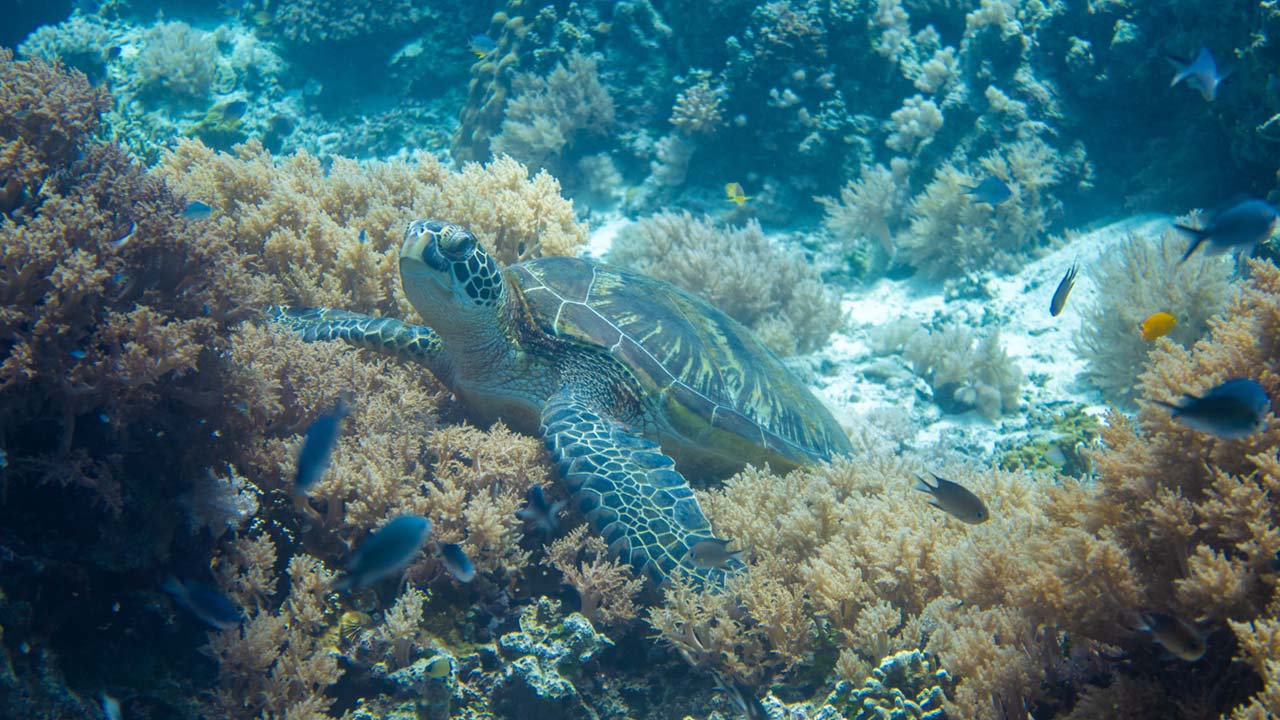
It is not. The best experiences in the Philippines – sea turtles at Balicasag, jellyfish at Sohoton Cove, the Chocolate Hills at sunrise, the limestone lagoons of Coron – have nothing to do with surfing. Non-surfers who understand this consistently have better trips than surfers who spend their entire visit chasing waves.
This guide covers four islands where surfing is optional, irrelevant, or simply not the point.
Cebu – marine life, waterfalls and a city that works
Cebu is the most practical first stop in the Philippines and arguably the best overall island for non-surfers. The range of experiences is extraordinary and none of them require a surfboard.
The sardine run at Moalboal is the headline act. Millions of sardines gather permanently just meters from shore at Panagsama Beach – no boat, no dive certification, no special timing required. You put on a mask, swim out fifty meters and find yourself inside a swirling mass of silver. Sea turtles are regularly spotted in the same area. It is one of the most accessible world-class marine experiences on earth.
Kawasan Falls in Badian is the adventure day. The canyoneering route follows the Kawasan River upstream through jungle passages, natural pools and cliff jumps before arriving at a multi-tiered turquoise waterfall. It takes around four to five hours and requires no previous experience – just reasonable fitness and a willingness to get wet.
Oslob whale sharks are controversial among conservationists and worth understanding before you go – the experience is heavily managed, with dozens of tourists in the water simultaneously. But the encounter itself – watching a whale shark move through clear water at close range – is genuinely extraordinary for anyone seeing one for the first time.
Cebu City deserves at least half a day. Fort San Pedro, Basilica del Santo Niño and Colon Street – the oldest street in the Philippines – give you a completely different side of the country from the one you see in travel photography.
For a day-by-day breakdown, read our Cebu tour packages guide.
Bohol – the island that rewards slow travel
Bohol is the quietest of the four islands in this guide and often the one that surprises people most. It does not have a famous surf break or a white beach that draws crowds. What it has is variety – and the kind of landscapes that make travelers extend their stays.
The Chocolate Hills are Bohol’s most recognizable landmark – over 1,200 perfectly cone-shaped hills that turn brown in the dry season. They are more surreal in person than in photographs. Go early, before the day-trip groups from Cebu arrive, and the viewpoint at Carmen gives you one of the more unusual panoramas in Southeast Asia.
Philippine tarsiers at the Corella sanctuary are among the most extraordinary wildlife encounters in the Philippines. Tarsiers are one of the world’s smallest primates – enormous eyes, tiny bodies, completely otherworldly. The sanctuary is ethical: the animals live freely in the trees, guides keep groups small, and the experience feels genuine rather than manufactured.
Balicasag Island is the marine highlight. Depart by boat early – 6:30am if possible – for the best snorkeling conditions before the late morning crowds. Sea turtles are close to guaranteed. The coral walls drop sharply into deep water with exceptional visibility, and the reef sharks and large schools of jacks that patrol the drop-off are regularly visible from the surface.
Pamilacan Island adds a fourth dimension if you have time. Spinner dolphins are regularly spotted in large pods in the waters around the island – depart before sunrise and you are likely to find yourself watching dozens of dolphins moving through calm open water in the first light of the day.
For a detailed itinerary, read our 4 days in Bohol guide.
Coron – where non-divers discover they wish they dived
Coron is the island in this guide that most benefits non-surfers who are also non-divers – and the one that most frequently converts them into divers by the time they leave.
Kayangan Lake is the most iconic stop on the standard island hopping circuit – a crater lake inside a mountain, often described as the clearest lake in Asia. The hike to the viewpoint takes around fifteen minutes and the view from the ridge is worth the effort regardless of whether you swim. The lake itself is extraordinary – jade-green water, perfect visibility, surrounded by sheer limestone walls.
Twin Lagoon connects two bodies of water through a narrow limestone passage and changes dramatically with the tide. At low tide you can swim through the gap between the rocks. At high tide the passage is just high enough to squeeze a small boat through. It is genuinely unlike anything else in Palawan.
The WWII wrecks are the signature Coron experience and more accessible than most non-divers realize. Several Japanese ships sunk in a 1944 US airstrike rest at depths of ten to fifteen meters – shallow enough to snorkel above, and the coral and marine life that have grown around them over eighty years are extraordinary even from the surface.
Barracuda Lake has one of the most unusual swimming experiences in the Philippines – a thermocline where cold and warm water meet in the same body, creating a layered effect that is visible underwater and strange to swim through.
For more context on what makes Coron worth the trip, read our El Nido vs Coron comparison.
Siargao – the one that surprises non-surfers most
Siargao has the strongest surfing identity of the four islands in this guide. Cloud 9 is one of the best waves in Asia and the island’s reputation is built on it. Which is exactly why non-surfers tend to underestimate what is on offer here.
The Tri-Island tour to Naked Island, Daku and Guyam is one of the best single-day boat trips in the Philippines. Naked Island is a pure white sandbar with no trees and no facilities – just sand and open horizon. Daku is larger, shaded by palms and the setting for a traditional boodle fight lunch. Guyam is tiny and photogenic from every angle. Together they give you the most visually iconic day in Siargao without going near a surfboard.
Sohoton Cove is the experience that changes people’s minds about Siargao. Located on Bucas Grande Island, two hours by boat from General Luna, Sohoton is a protected natural reserve of limestone cliffs, sea caves and – most extraordinarily – a lagoon filled with stingless jellyfish. The jellyfish cannot sting. They drift through the water in the thousands and swimming among them is one of the most genuinely unusual natural experiences available anywhere in the Philippines.
Sugba Lagoon and Magpupungko Rock Pools fill the third day without any surf involvement whatsoever. Sugba is a wide turquoise lagoon accessible by a short bangka ride, with a wooden diving platform in the center. Magpupungko is a stretch of dramatic rock formations where tidal pools fill with warm, clear water at low tide.
Cloud 9 is worth seeing even if you have no intention of surfing. The viewing platform above the break gives you a grandstand view of one of the world’s great waves, and the atmosphere around the pier – surfers paddling out, locals watching – is genuinely engaging regardless of your relationship with the ocean.
For a full day-by-day breakdown, read our 3 days in Siargao guide or our Siargao travel guide.
How to choose between them
Go to Cebu if you want the widest range of experiences in the shortest time – marine life, adventure, culture and city in one destination. It is also the most practical entry point with direct international flights.
Go to Bohol if you want a slower trip with extraordinary wildlife and the most varied landscapes of the four islands. Combine it with Cebu (two hours by ferry) for a strong first Philippines trip.
Go to Coron if diving or snorkeling above WWII wrecks is something you want to experience, or if dramatic lagoon scenery is the priority. It is the most remote of the four and the most rewarding for travelers who make the effort.
Go to Siargao if you want the least touristed atmosphere, the most extraordinary island hopping (Sohoton Cove) and a pace of travel that makes most visitors want to extend their stay. Do not let the surf reputation put you off.
If you have ten days or more, Cebu, Bohol and Coron together cover the full range of what makes the Philippines extraordinary for non-surfers. Read our 10-day Philippines itinerary for the full route.
Practical notes for non-surfers visiting the Philippines
- Cebu is the easiest entry point – direct international connections from many European, Middle Eastern and Asian hubs, and the most developed infrastructure for tours and logistics
- Cebu to Bohol is a ferry – 90 minutes on fast craft, no domestic flight needed
- Bohol to Coron requires a flight – from Tagbilaran or Cebu to Busuanga, around one hour
- Siargao has direct flights from Manila and Cebu – schedules vary by season, book early
- Go early for everything on the water – Balicasag, Naked Island, Kayangan Lake and Sugba Lagoon are all significantly better before late morning
- Private tours make a difference – not because shared tours are bad, but because the flexibility to leave earlier, stay longer and set your own pace changes the quality of every experience
Final thoughts
The Philippines is one of the best countries in the world for travelers who do not surf. The marine life alone – sardines, sea turtles, whale sharks, jellyfish, WWII wrecks – covers more extraordinary underwater experiences than most destinations offer in total.
The surf reputation is real and well-earned. But it has created a perception that does a disservice to everyone who stays away because they think the country is not for them.
It is very much for them.
If you would like help planning a Philippines trip across any of these islands with private tours and trusted local coordination, explore our Philippines tour packages or start with a custom island itinerary built around your dates and travel style.
FAQ
Is the Philippines good for non-surfers?
Yes – the Philippines is one of the best destinations in the world for non-surfers. The marine life (sardine run, sea turtles, whale sharks, jellyfish lagoons, WWII wrecks), landscapes (Chocolate Hills, limestone lagoons, crater lakes) and island hopping routes are all extraordinary without any surfing involvement.
Is Siargao worth visiting if you don’t surf?
Absolutely. The Tri-Island tour, Sohoton Cove jellyfish lagoon, Sugba Lagoon and Magpupungko Rock Pools are all accessible without surfing and are among the best day trips available in the Philippines. Most non-surfers who visit Siargao leave wishing they had stayed longer. Read our Siargao travel guide for the full picture.
Which Philippines island is best for snorkeling?
Cebu (Moalboal sardine run and Pescador Island) and Bohol (Balicasag Island) are the strongest snorkeling destinations for non-divers. Coron offers unique snorkeling above WWII shipwrecks. All three are accessible without a dive certification.
Do you need to dive to enjoy Coron?
No. Kayangan Lake, Twin Lagoon, the island hopping circuit and snorkeling above shallow WWII wrecks are all extraordinary without scuba diving. That said, Coron is one of the world’s best wreck diving destinations – many visitors who arrive as non-divers leave motivated to get certified.
What is the best first island to visit in the Philippines?
For most non-surfers visiting the Philippines for the first time, Cebu is the strongest starting point – direct international flights, the widest range of day trip experiences, and easy ferry connection to Bohol. Read our 7-day Philippines itinerary for a complete first-trip route.
Can you combine multiple islands in one Philippines trip?
Yes – and it is the best way to experience the country. Cebu and Bohol are connected by a two-hour ferry. Adding Coron requires one short domestic flight. Siargao can be combined with Cebu via direct flights. Read our 10-day Philippines itinerary for a complete multi-island route.
Is Boracay good for non-surfers?
Boracay has a world-class beach (White Beach) and a strong water sports scene (parasailing, kiteboarding, helmet diving) that suits non-surfers well. However, compared to Cebu, Bohol, Coron and Siargao, the overall experience is more beach-resort focused and less varied. Read our Siargao vs Boracay comparison for a detailed breakdown.


 Secure payments • Trusted providers